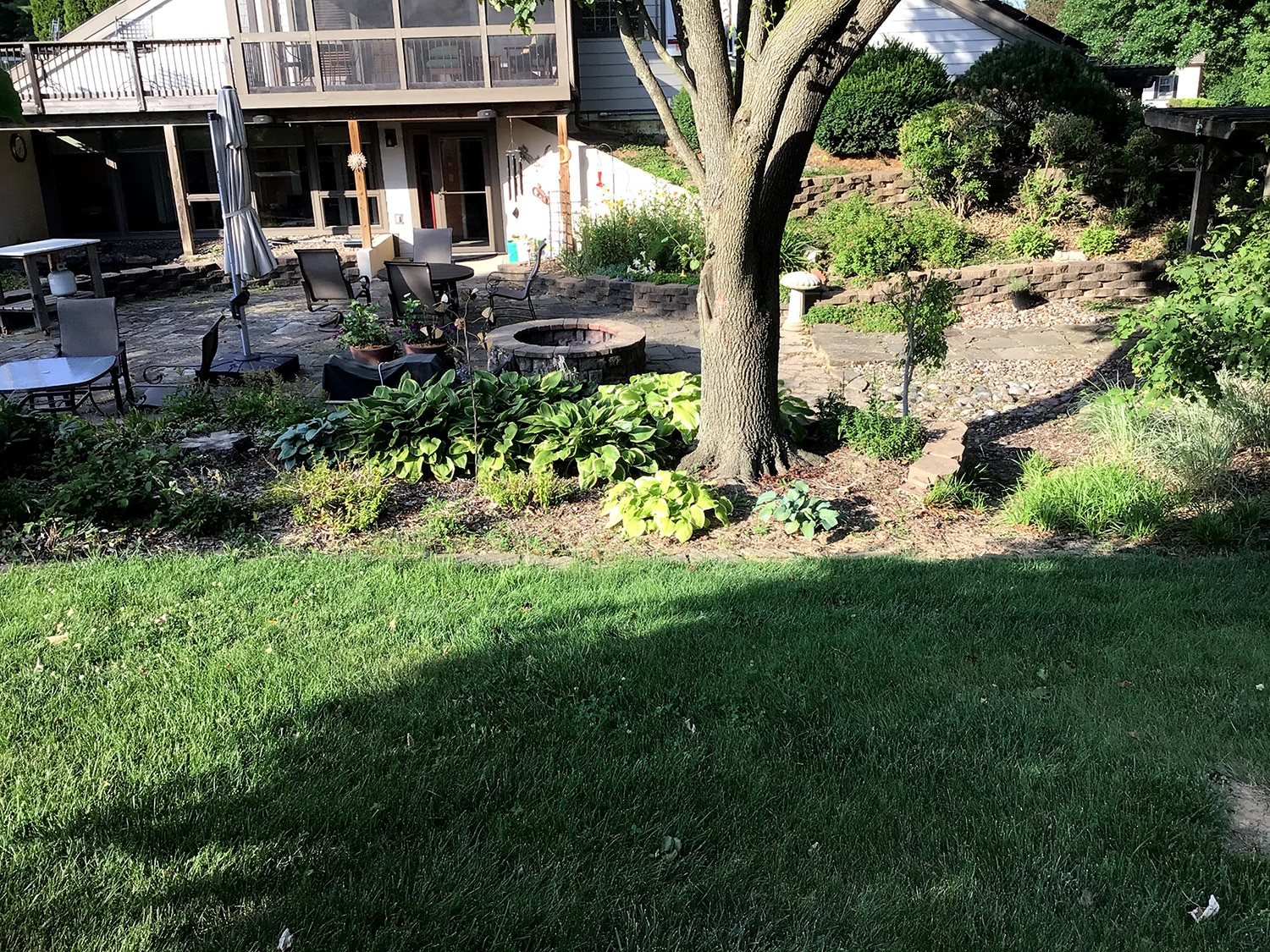
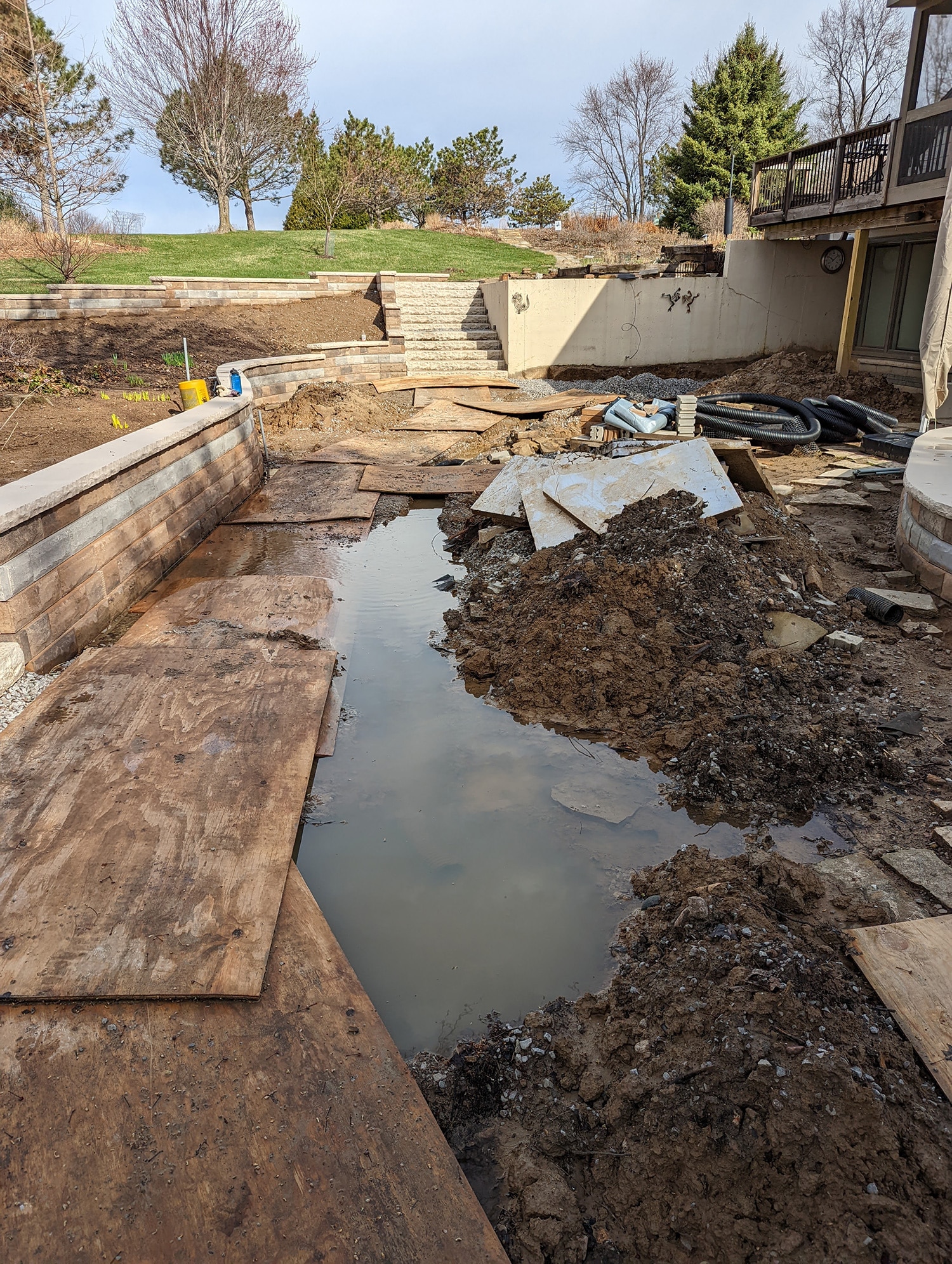
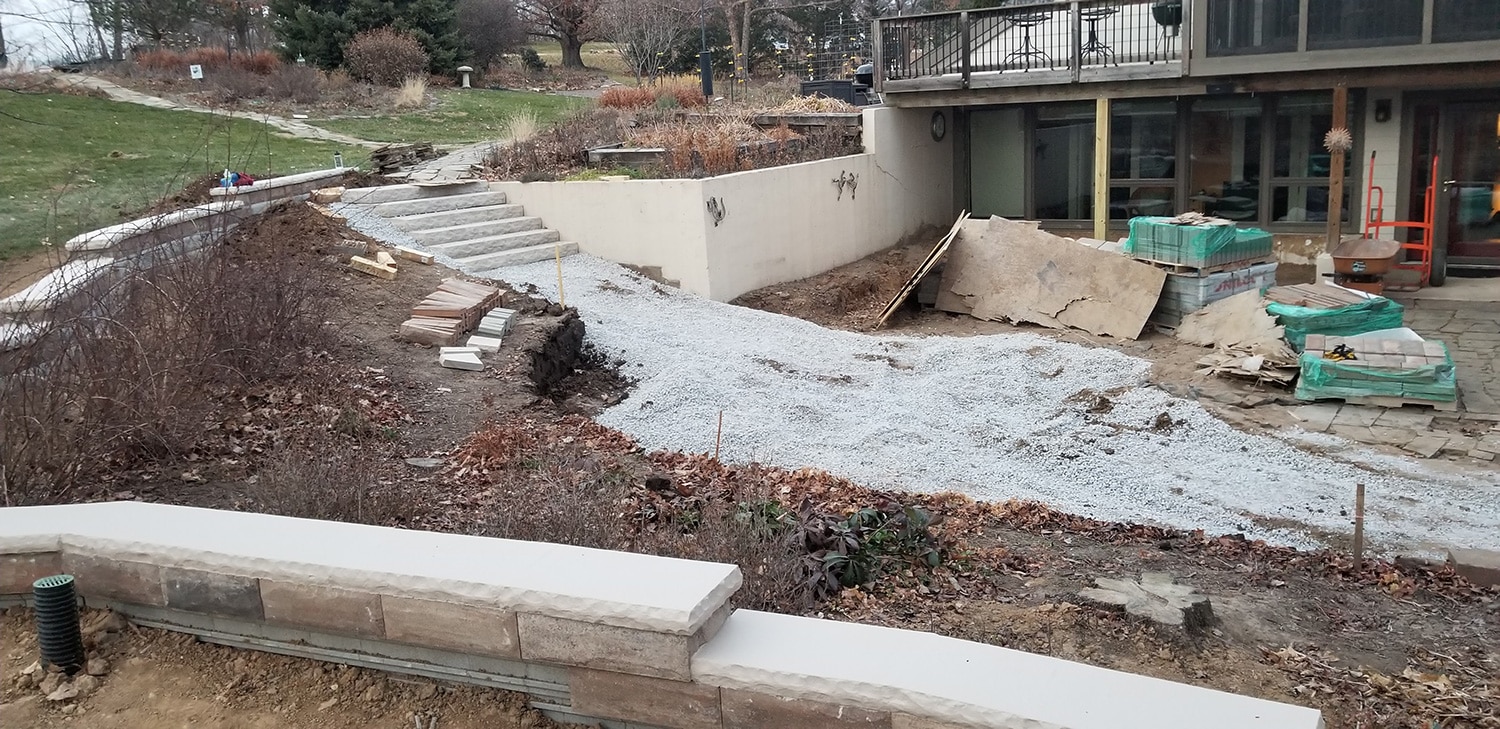
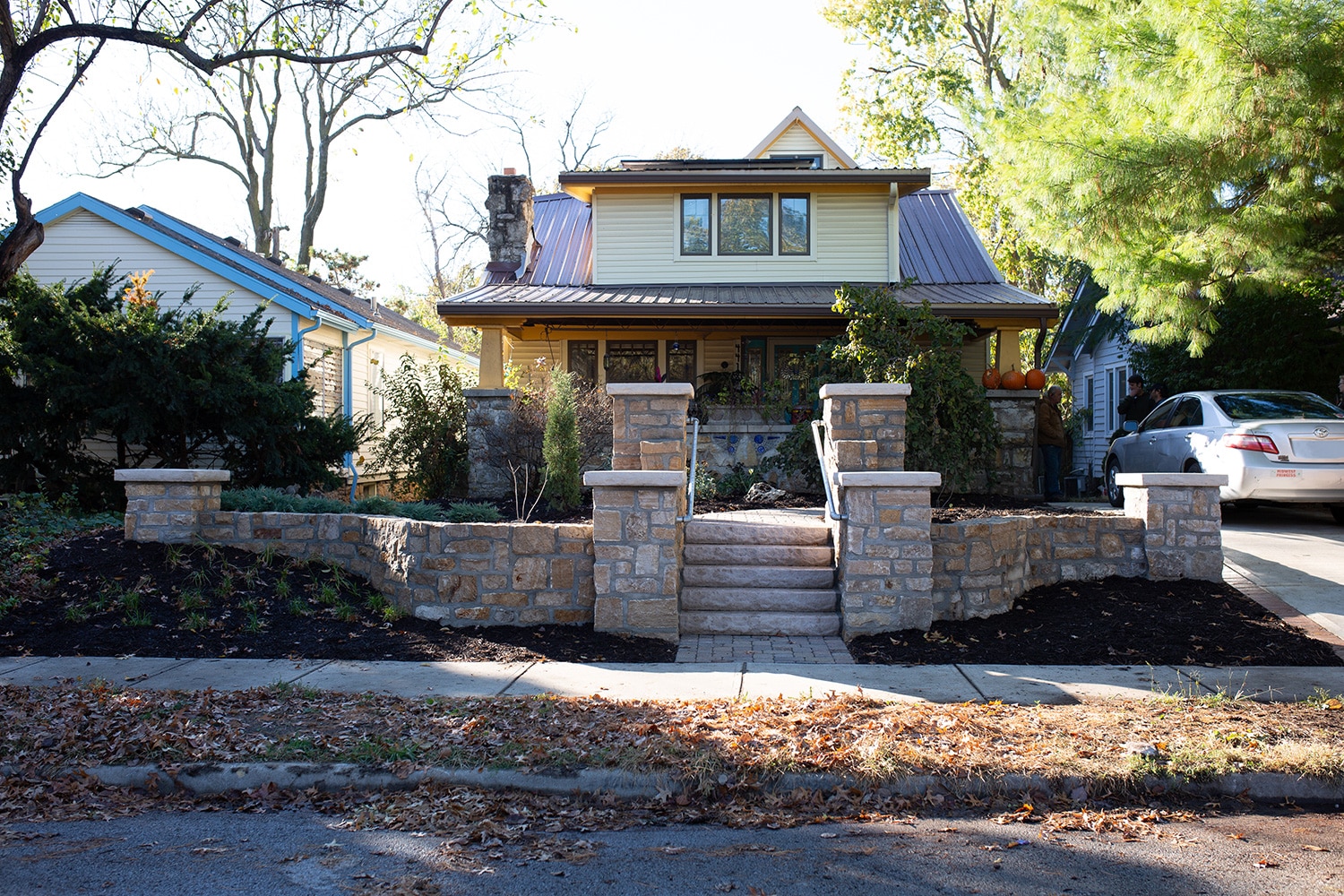
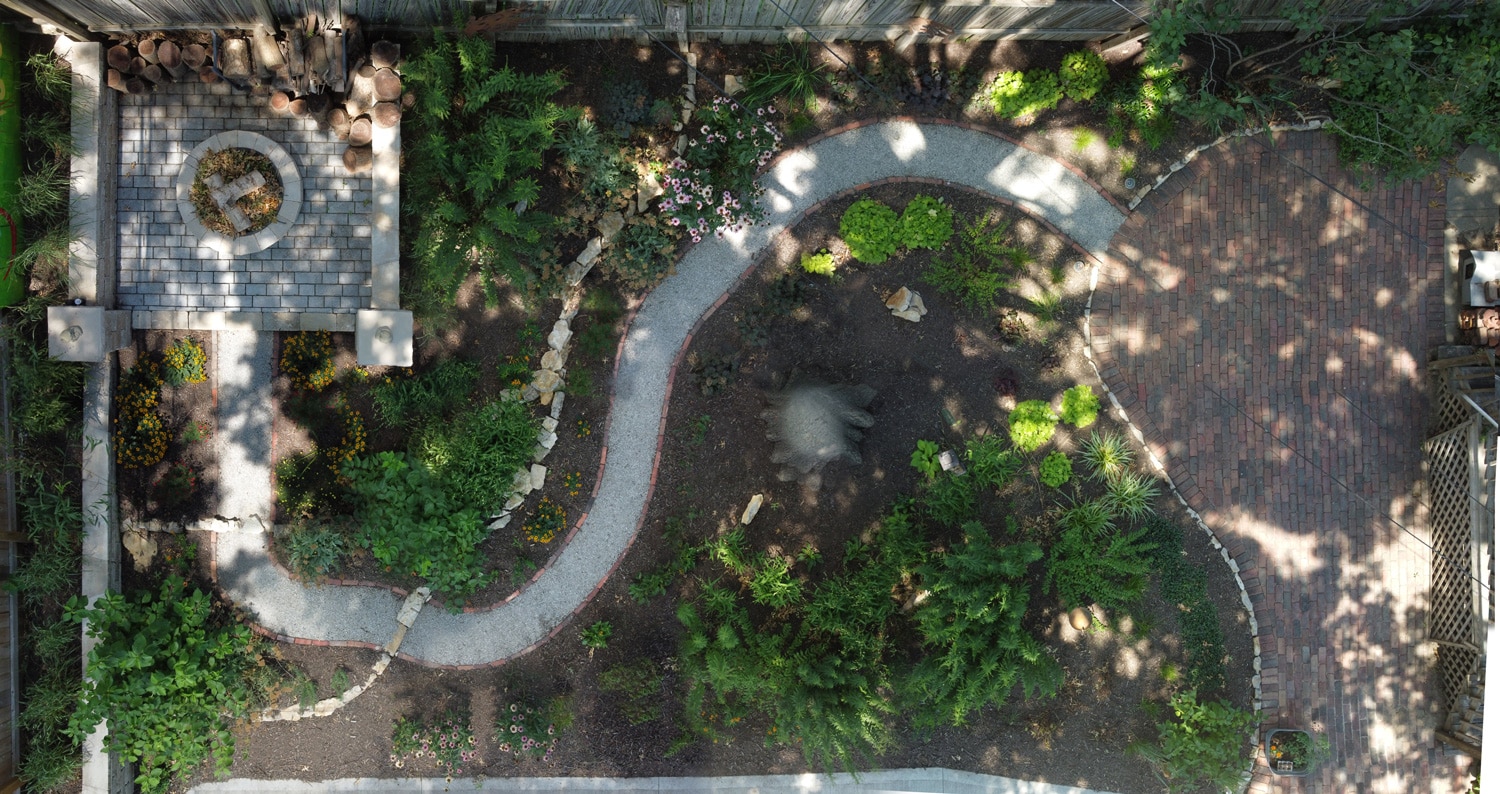
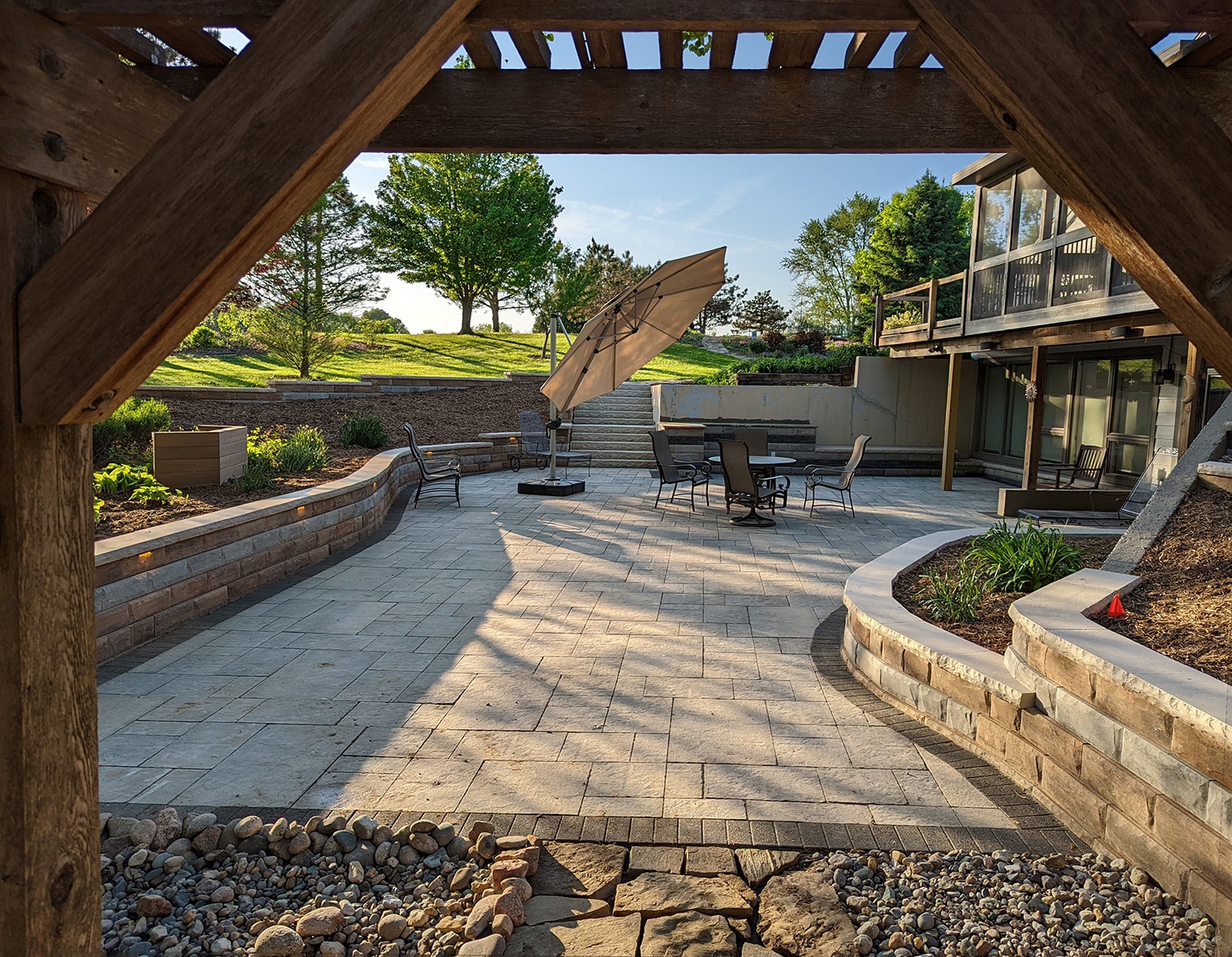
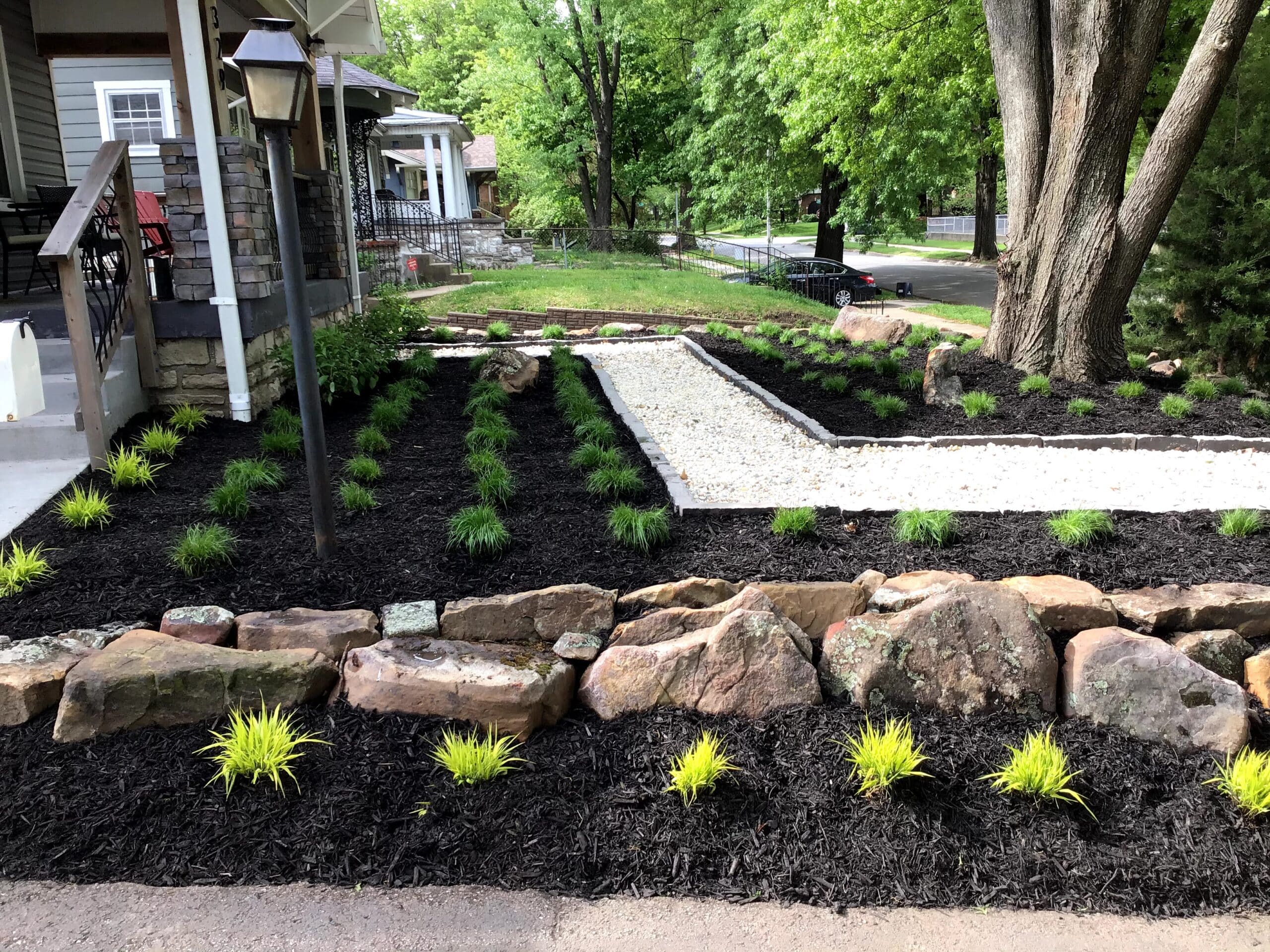
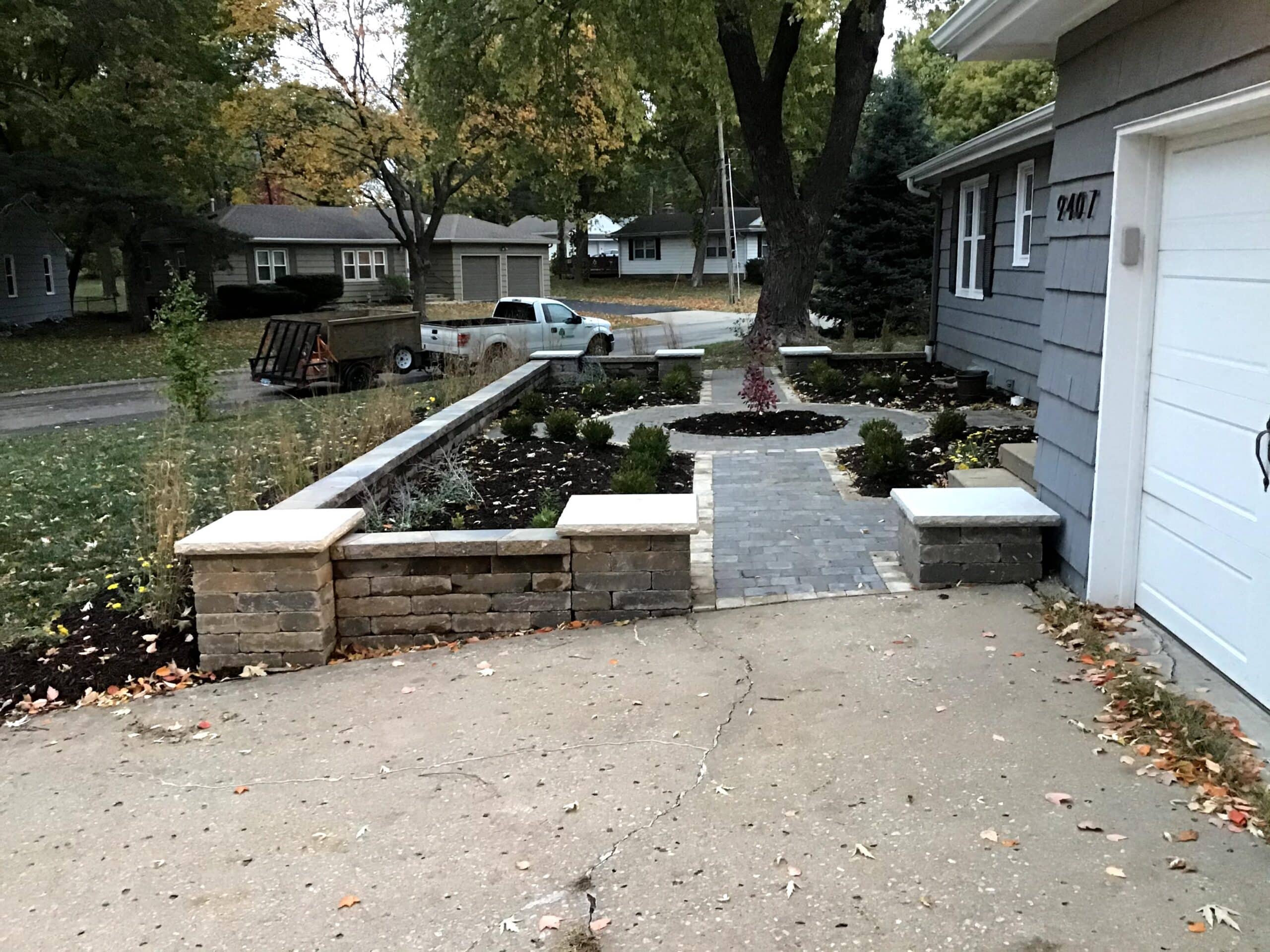
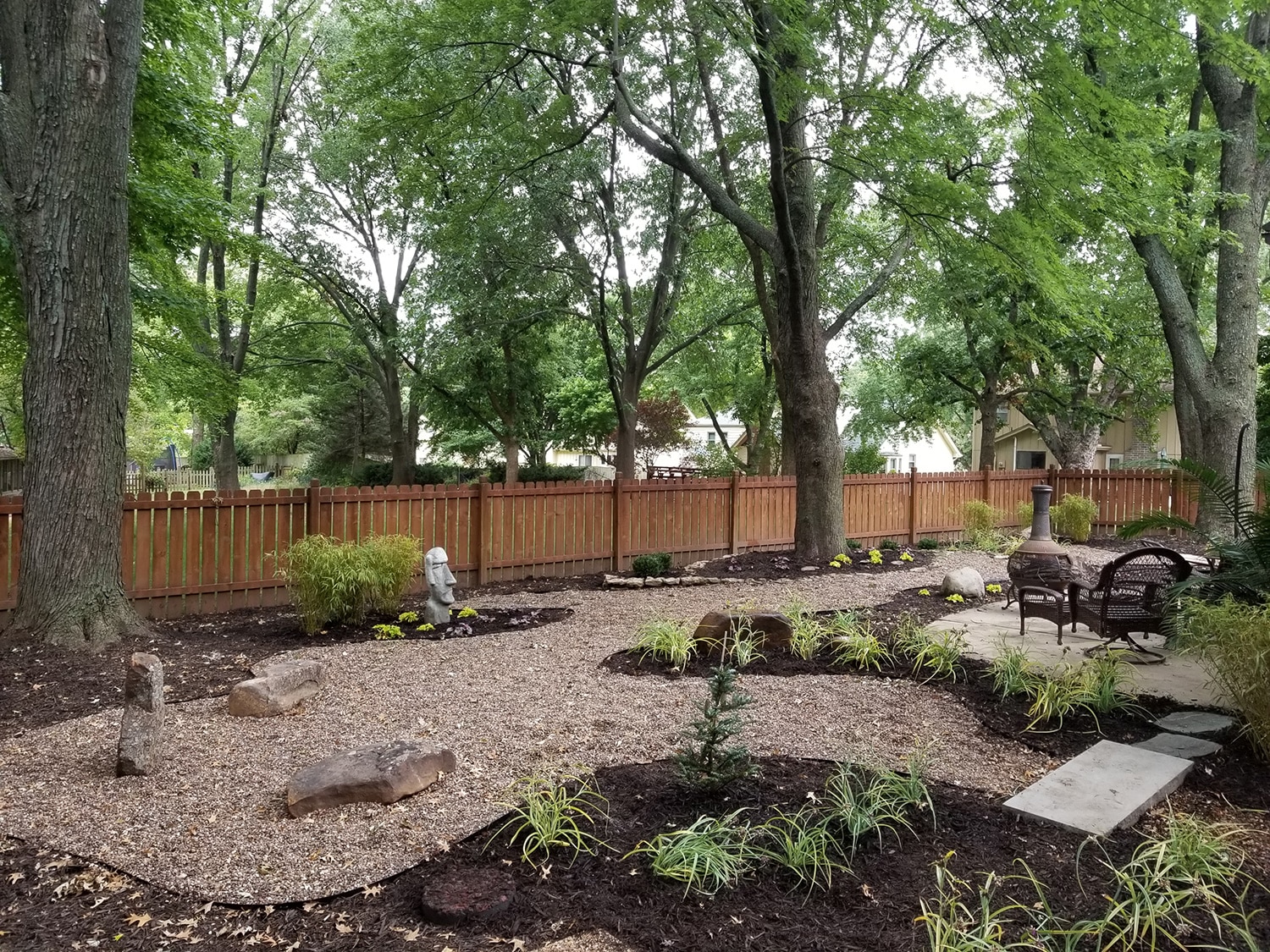
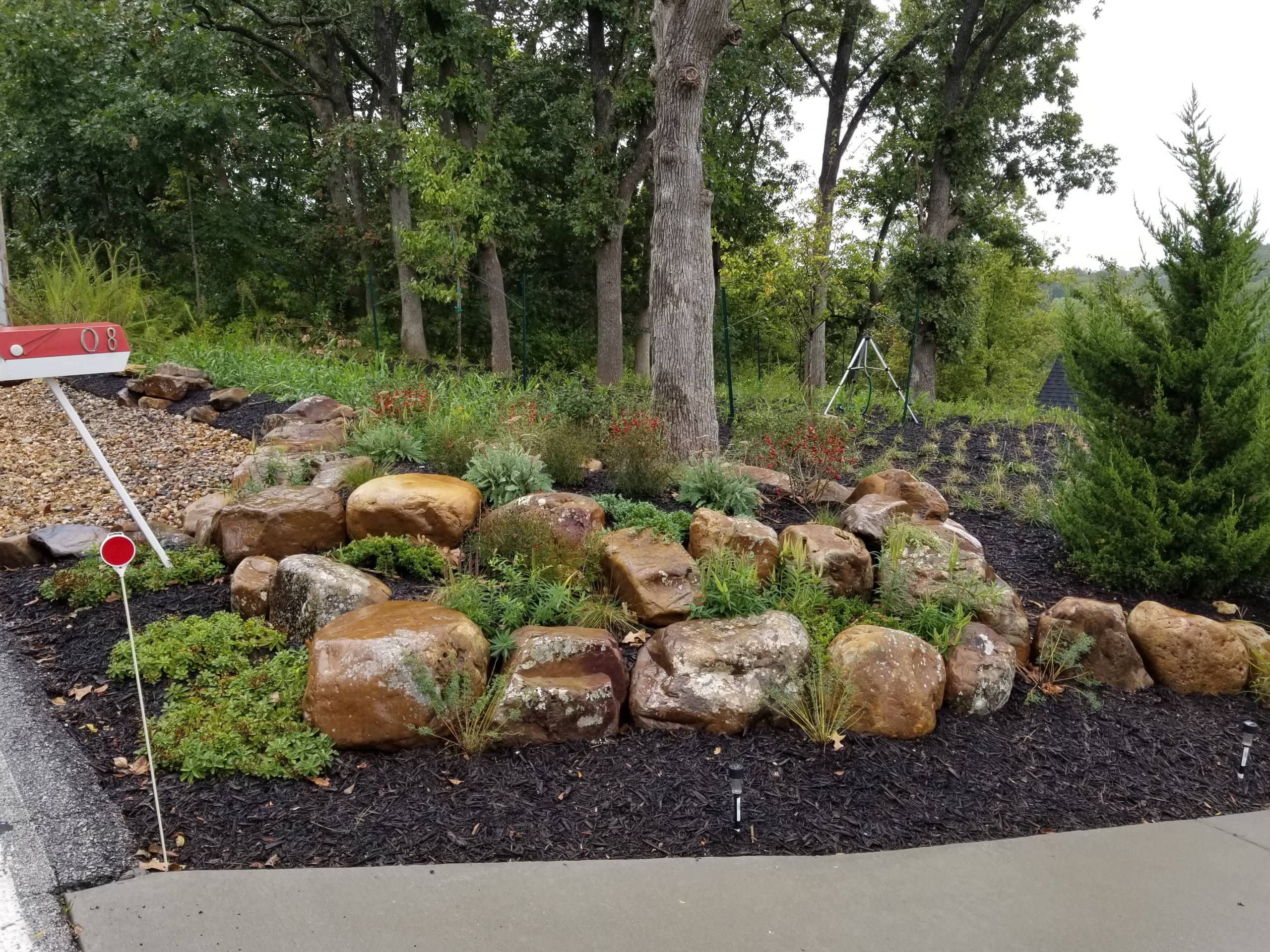
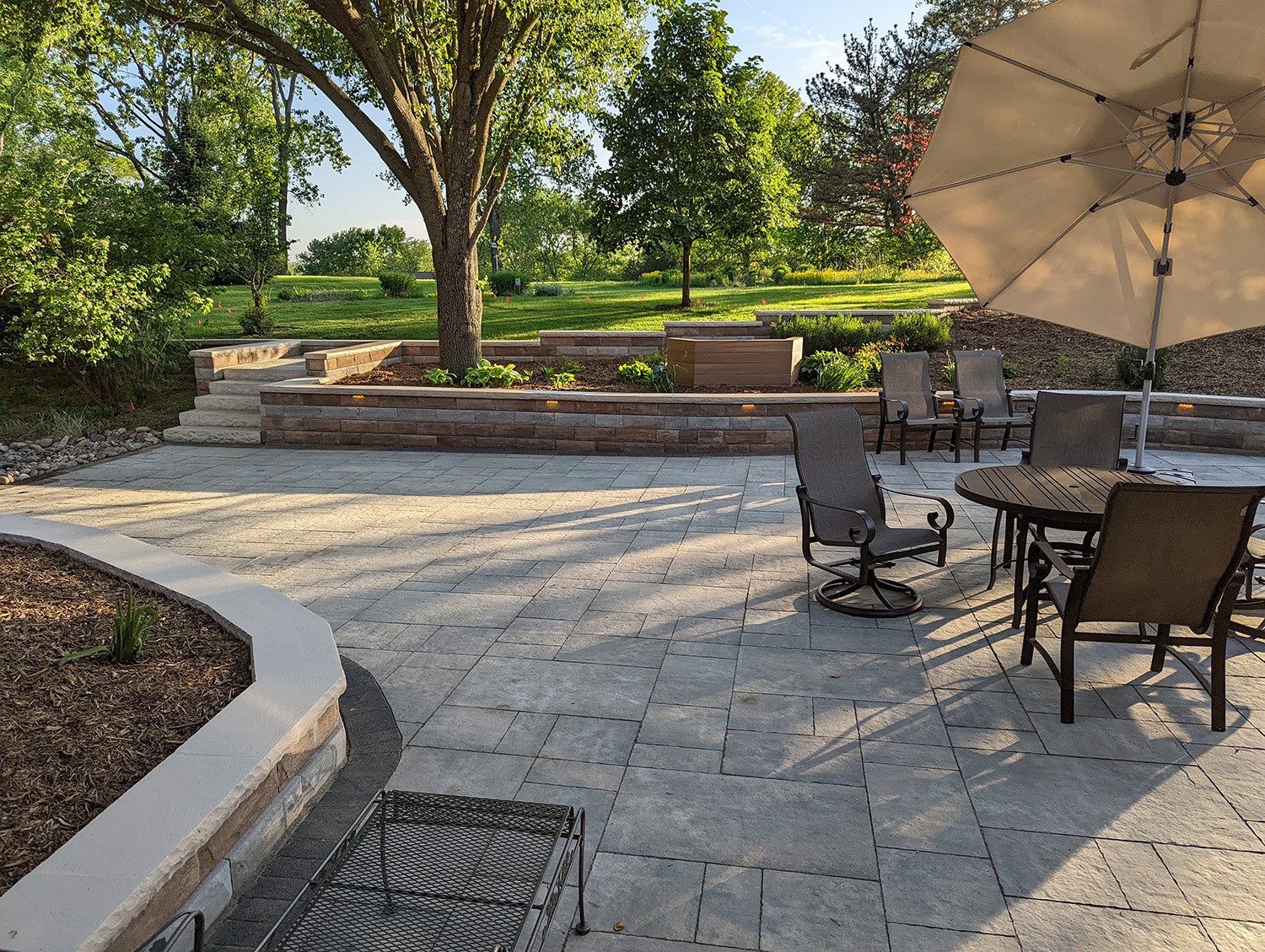
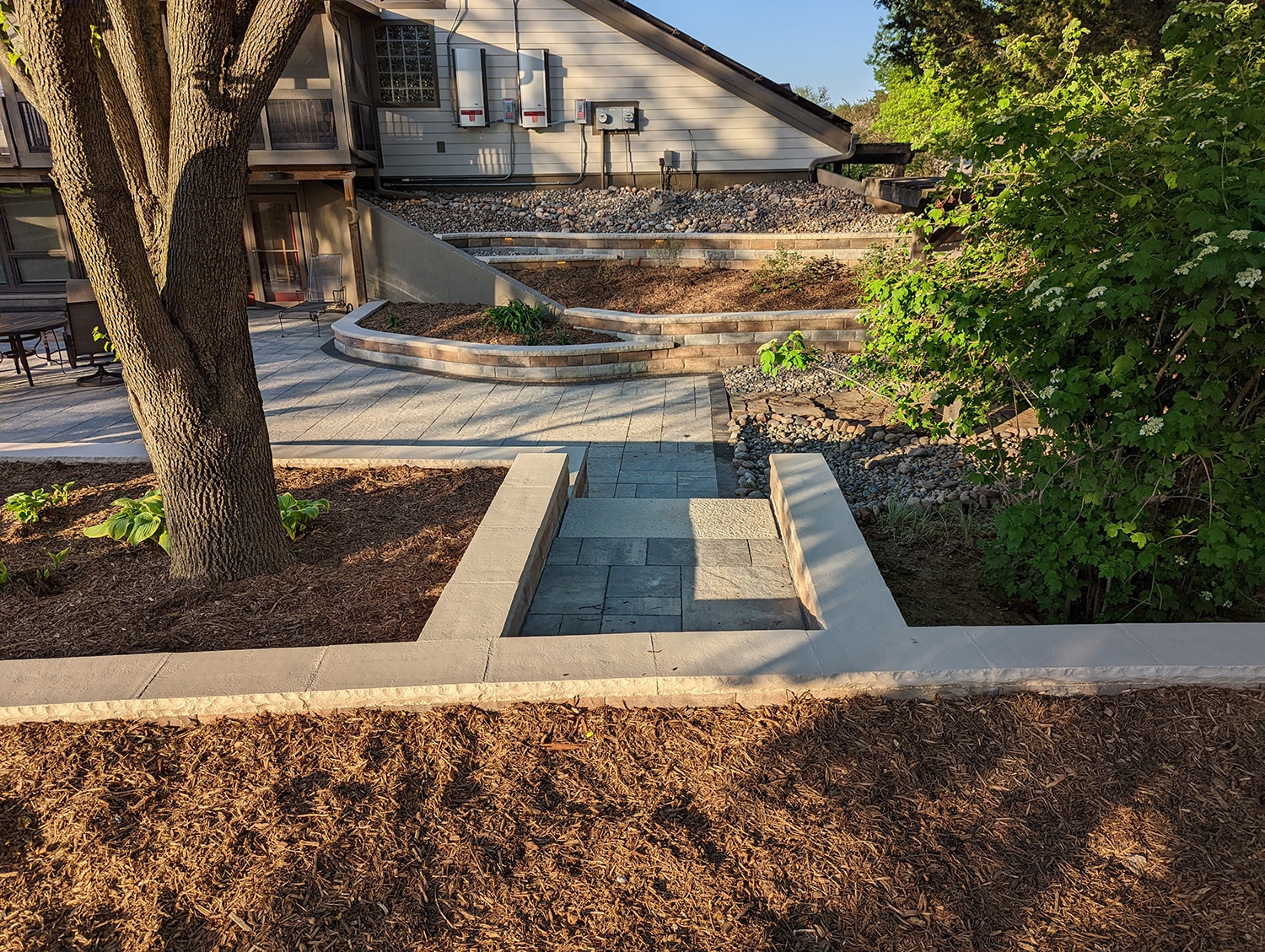
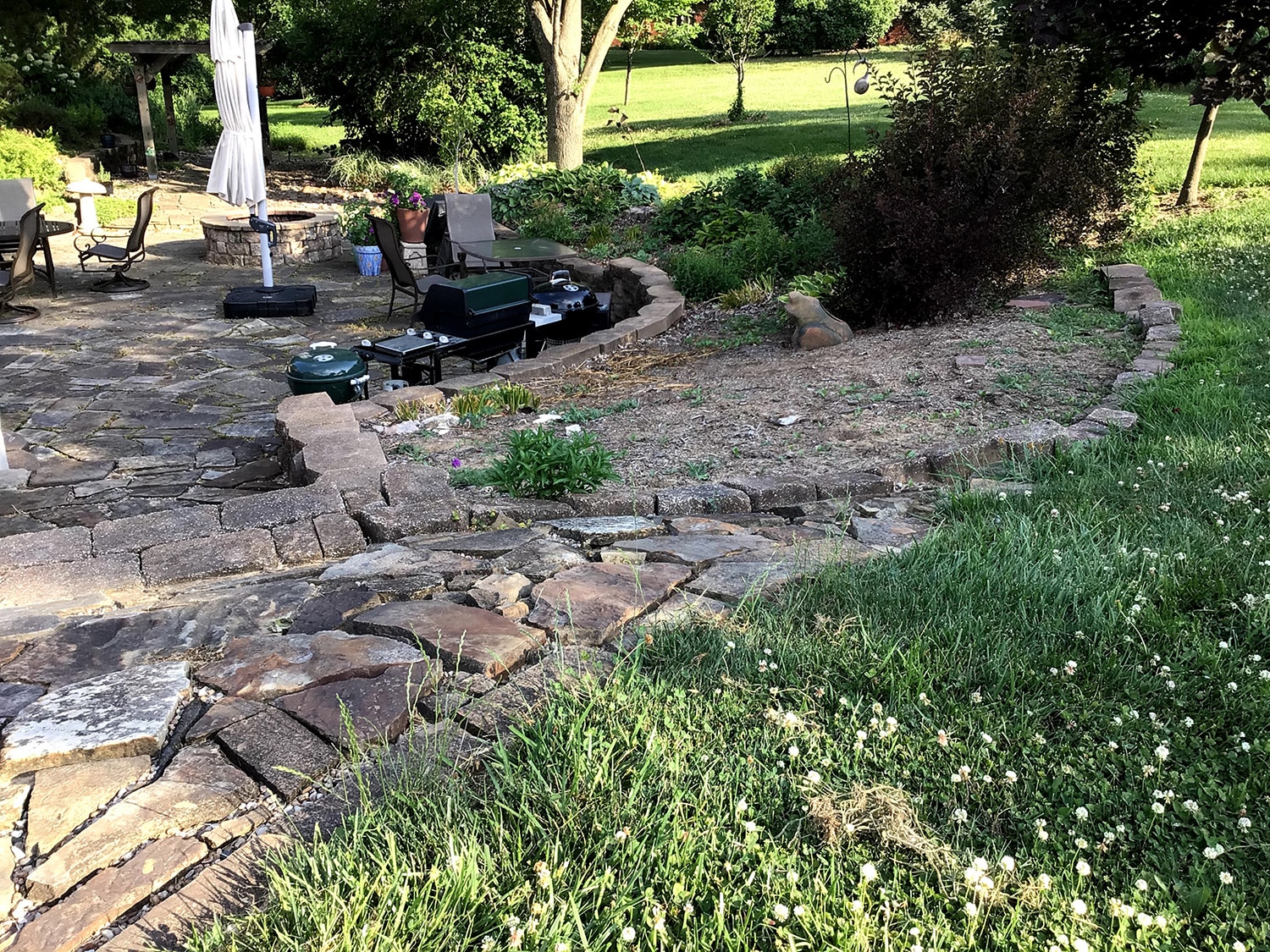
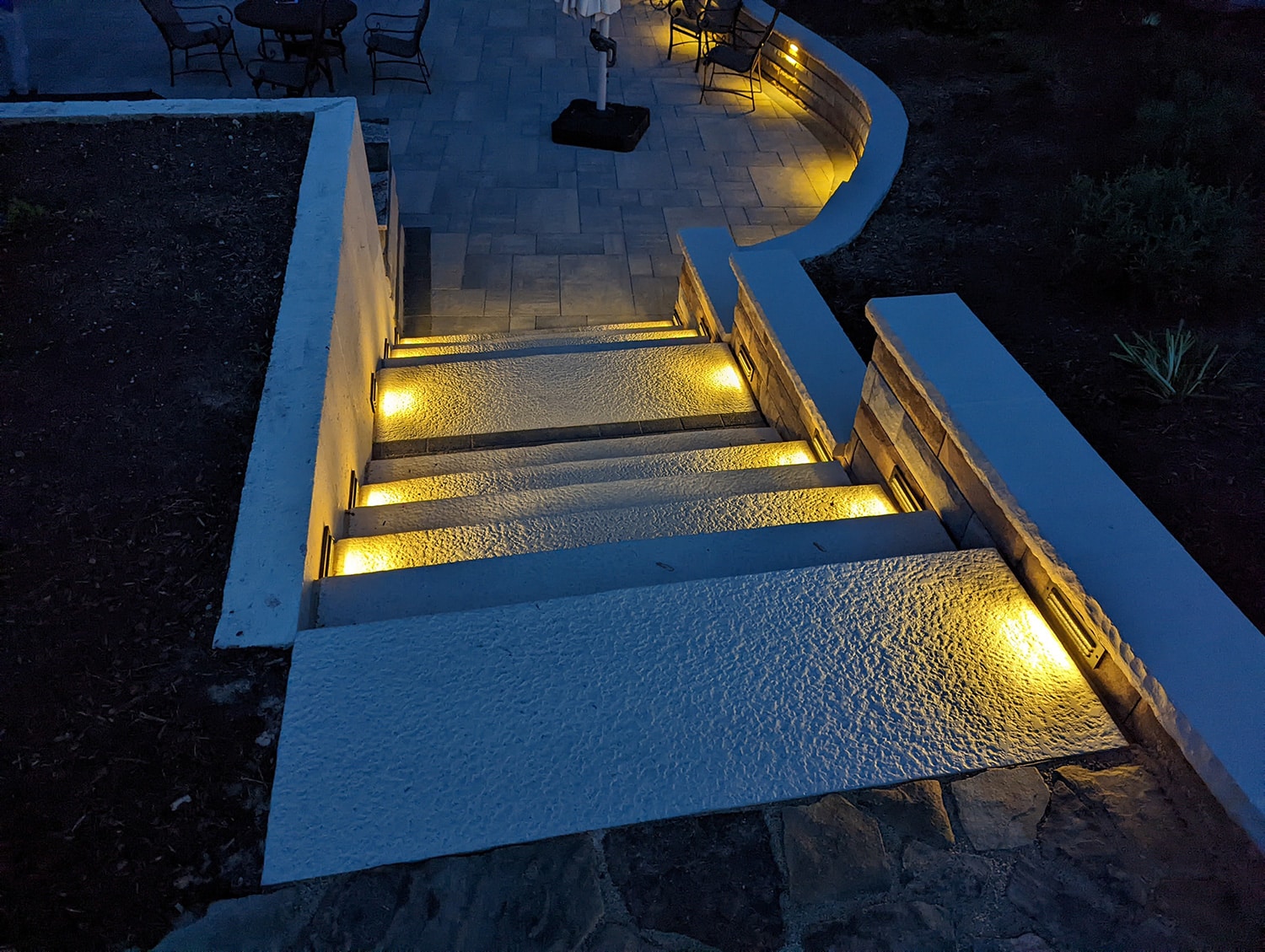
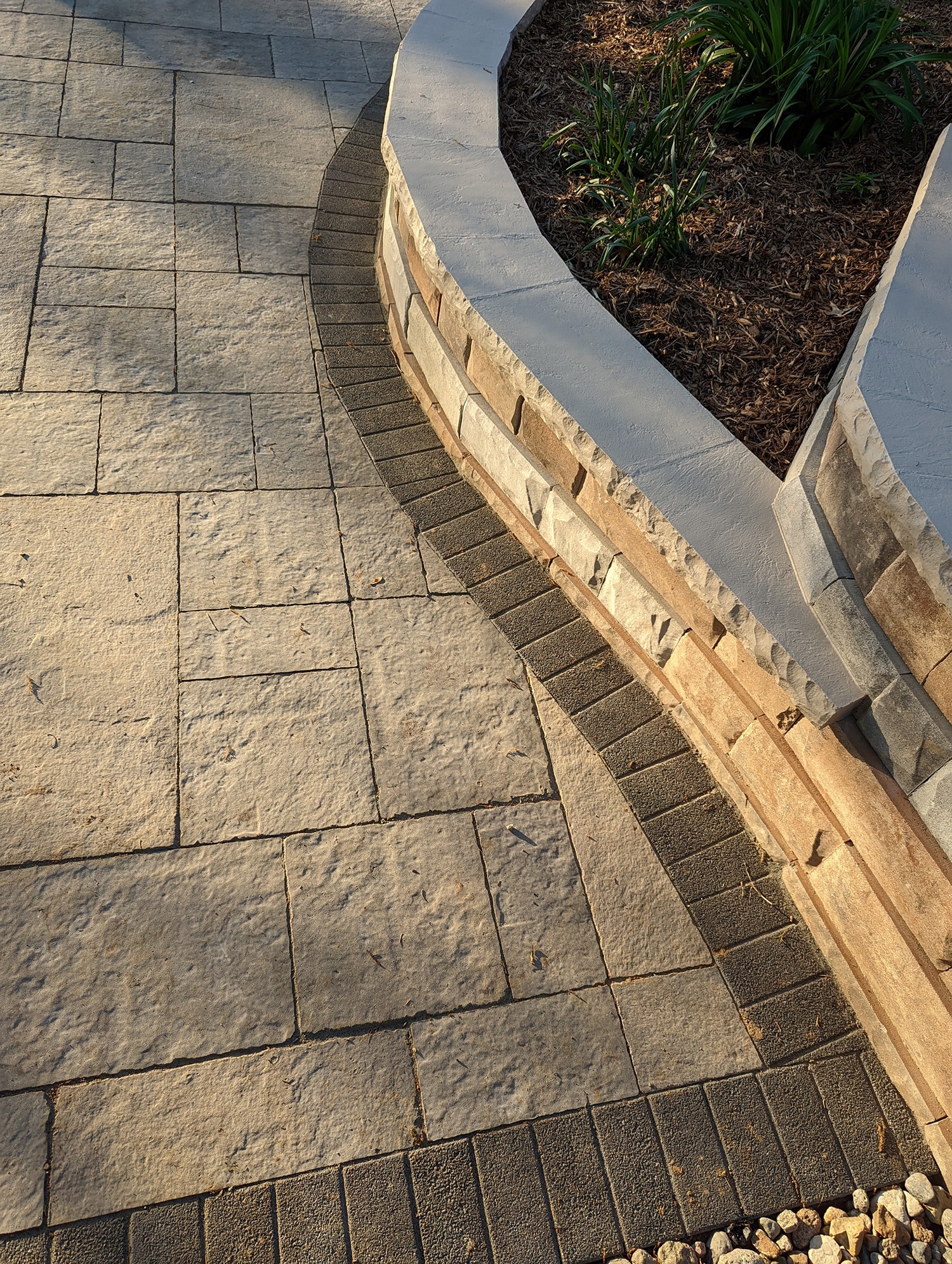
Old stone was burgeoning out of shape, walls and patio getting more misshapen every year.
This homeowner’s existing patio and retaining walls had stormwater issues, causing them to lean with some worrying gracelessness. The solution included all new retaining walls, stone steps, a grill station, a seating area, and a new paver patio — all installed alongside a network of french drains, drainage pipes, and an infiltration trench below a restored dry creek bed.
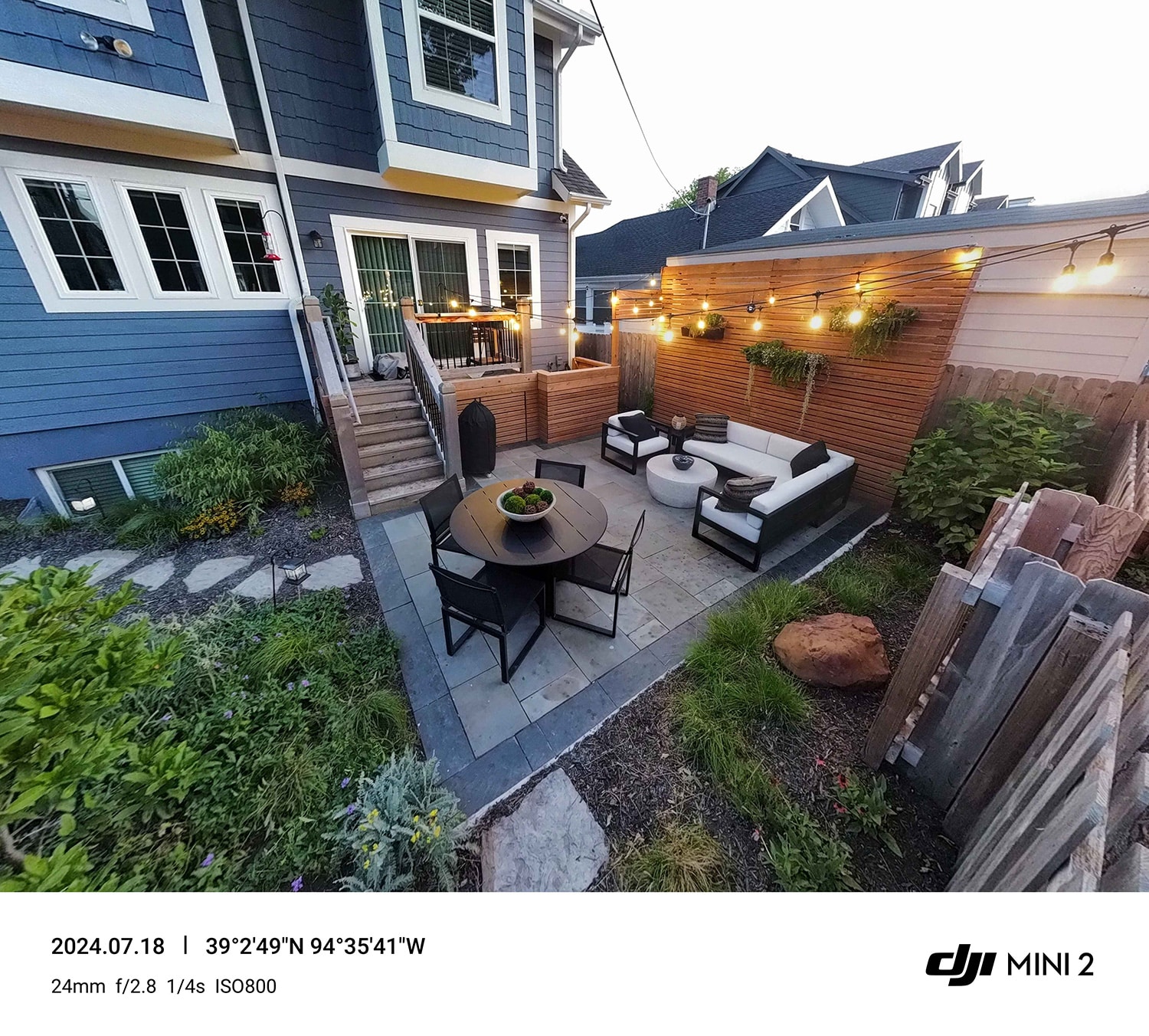
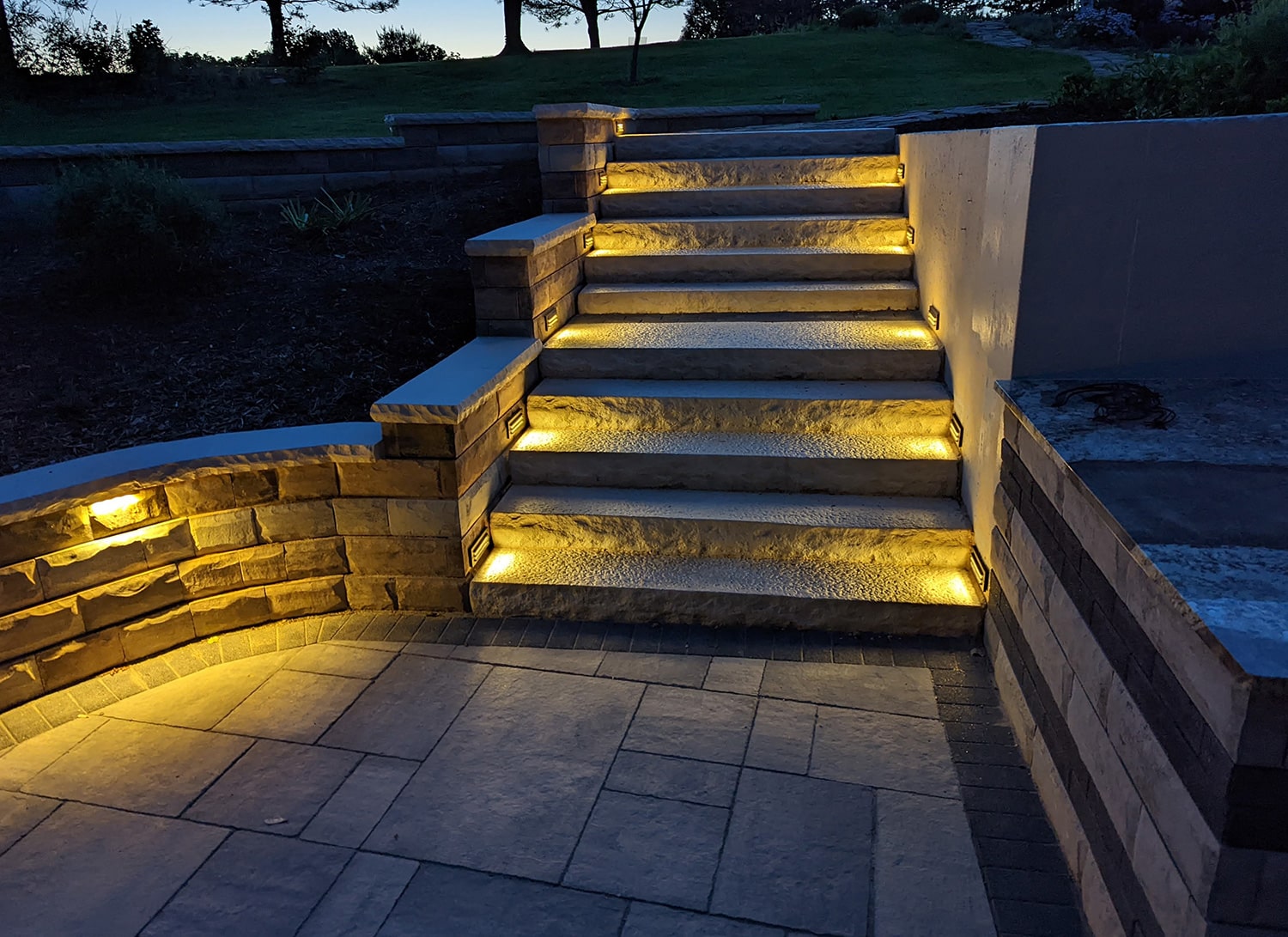
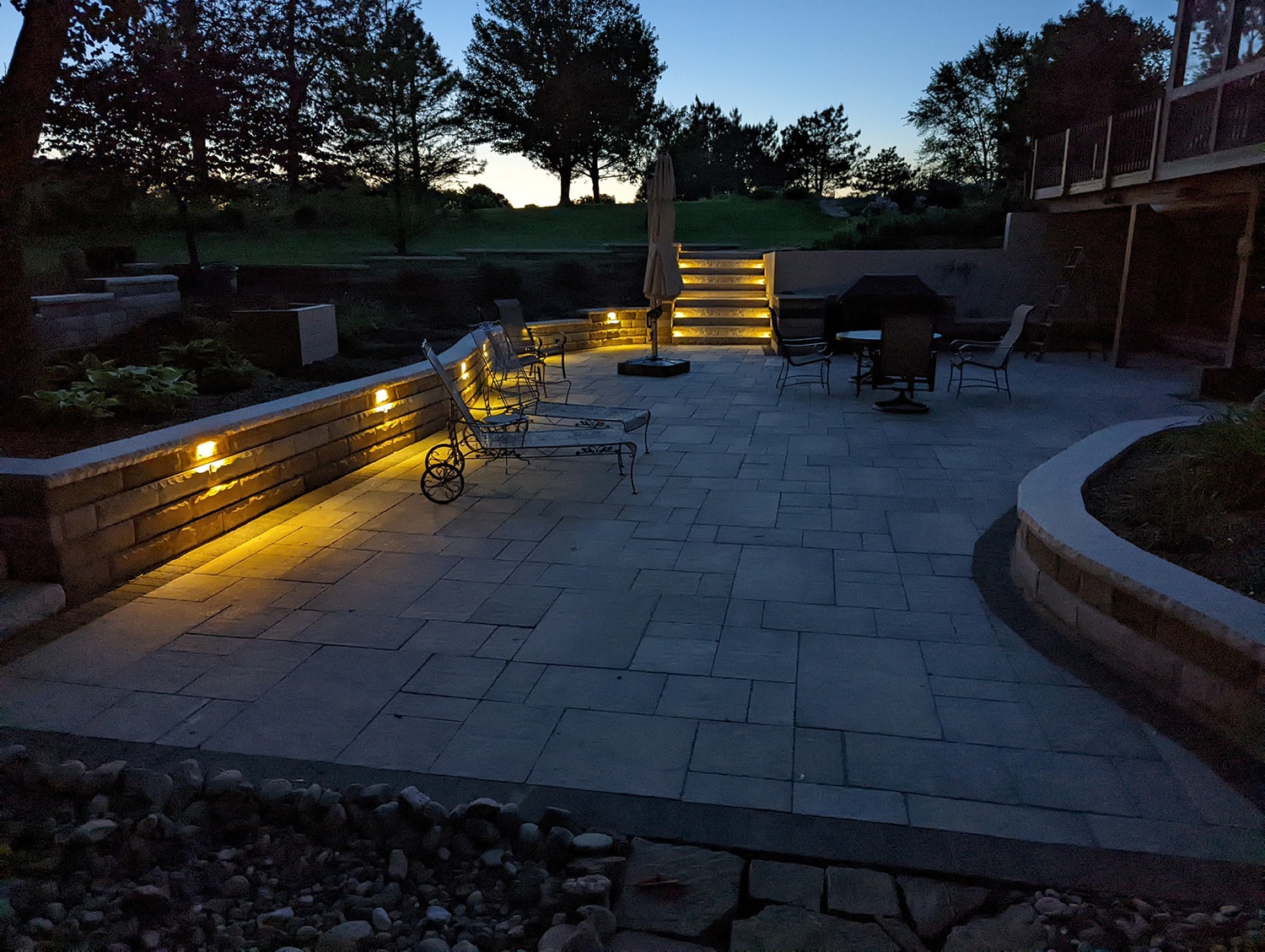
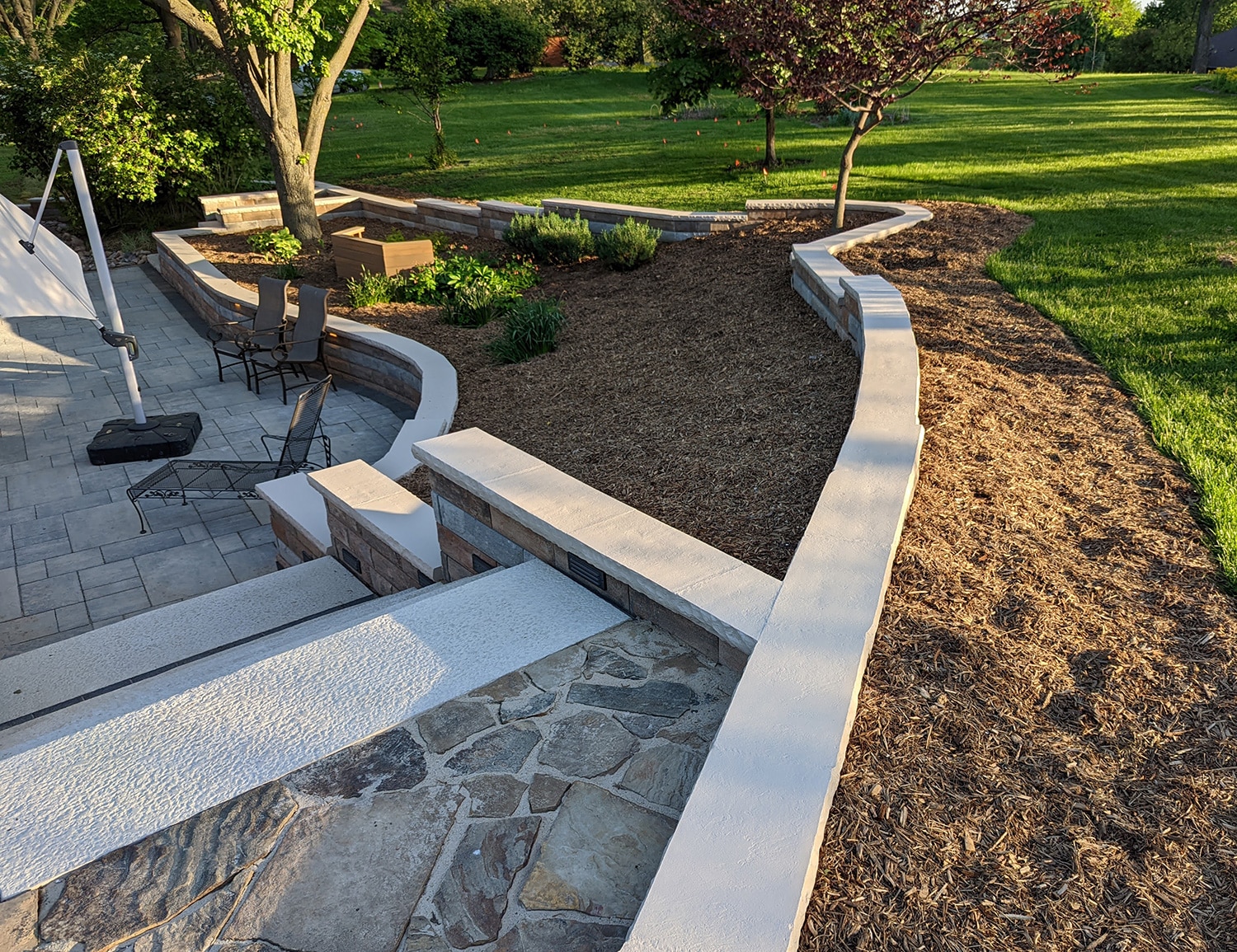
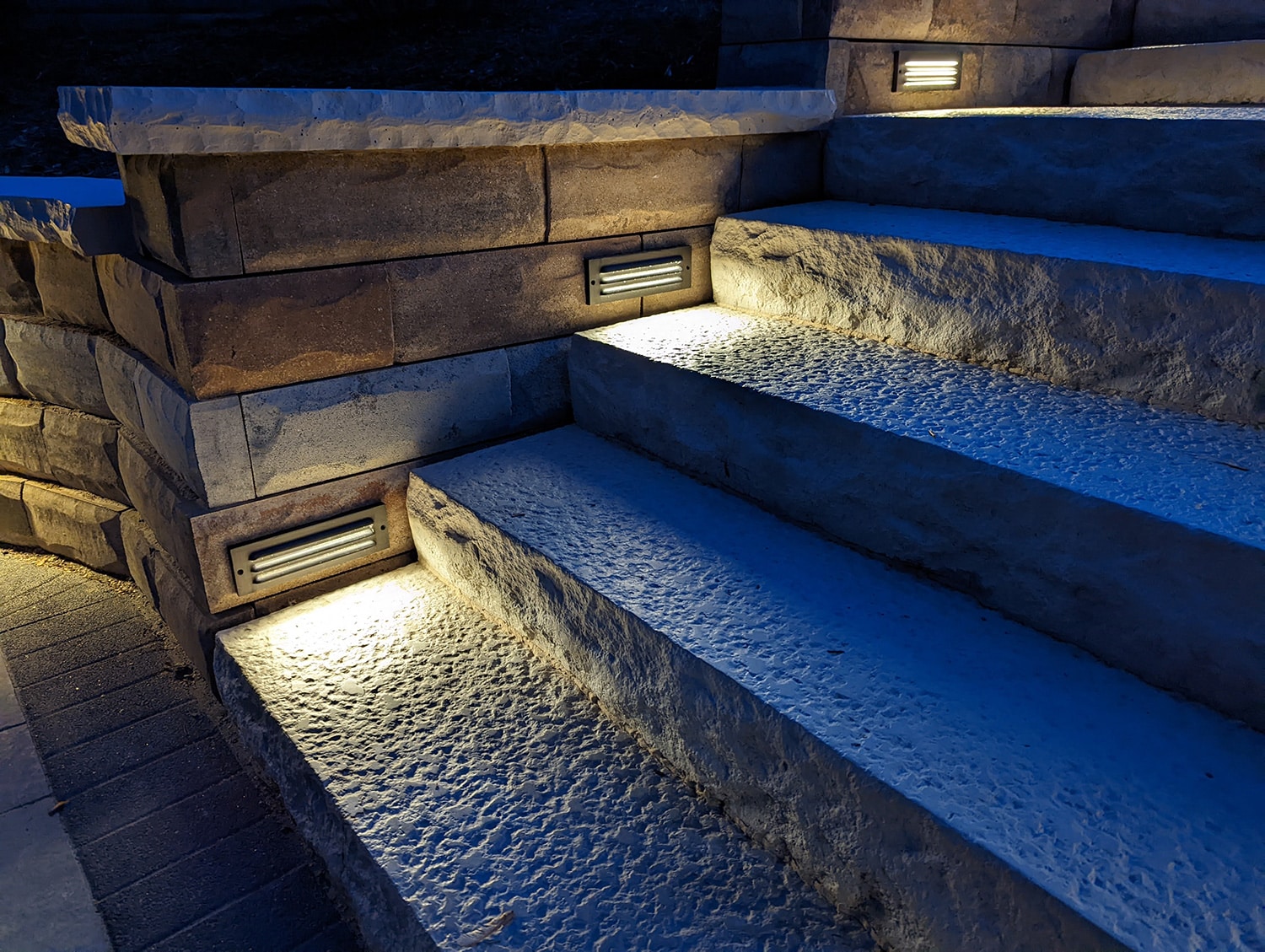
The resulting space was effortlessly clean, stylish, and richly lit at night for maximized entertaining, delighting our client and relieving their stormwater concerns all at once.
Learn More About This Project
As you might expect, there is more to this project than just replacing old with the new. So lets dive right in.
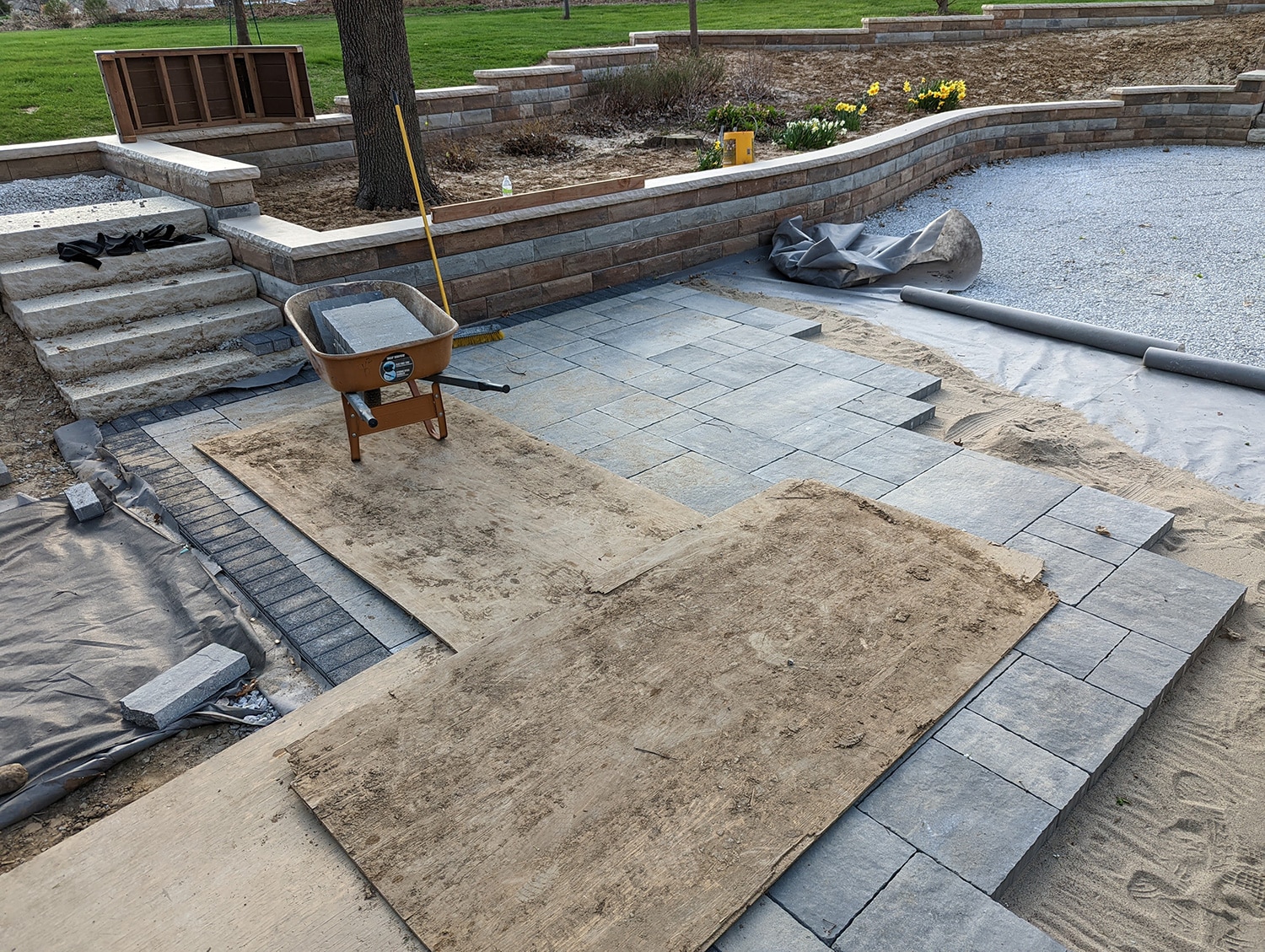
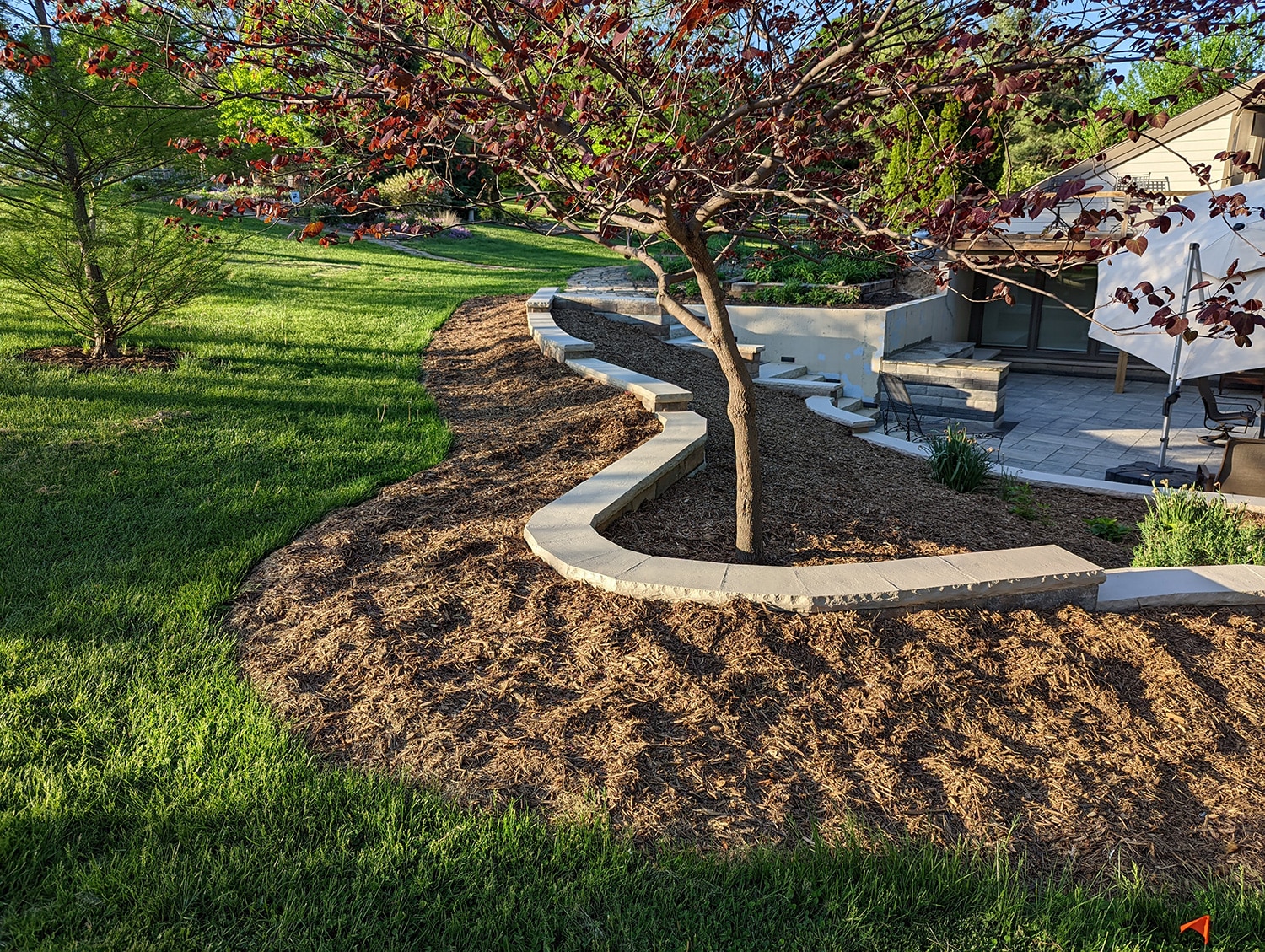
This project was no small job. We replaced over 600 square feet of existing retaining walls and added just over 300 square feet of new retaining wall that encircles the patio space and garden beds. We also added two sets of stone steps and replaced over 1300 square feet of paver patio. The finishing touch was new outdoor lighting that provides the right amount of ambient light to safely enjoy the space at night.
To begin this project, we started with a new outer wall that would prohibit any stormwater flowing onto the patio while also defining the garden bed. We added a bioswale on the uphill side of the wall that directs any stormwater to an existing rain garden.
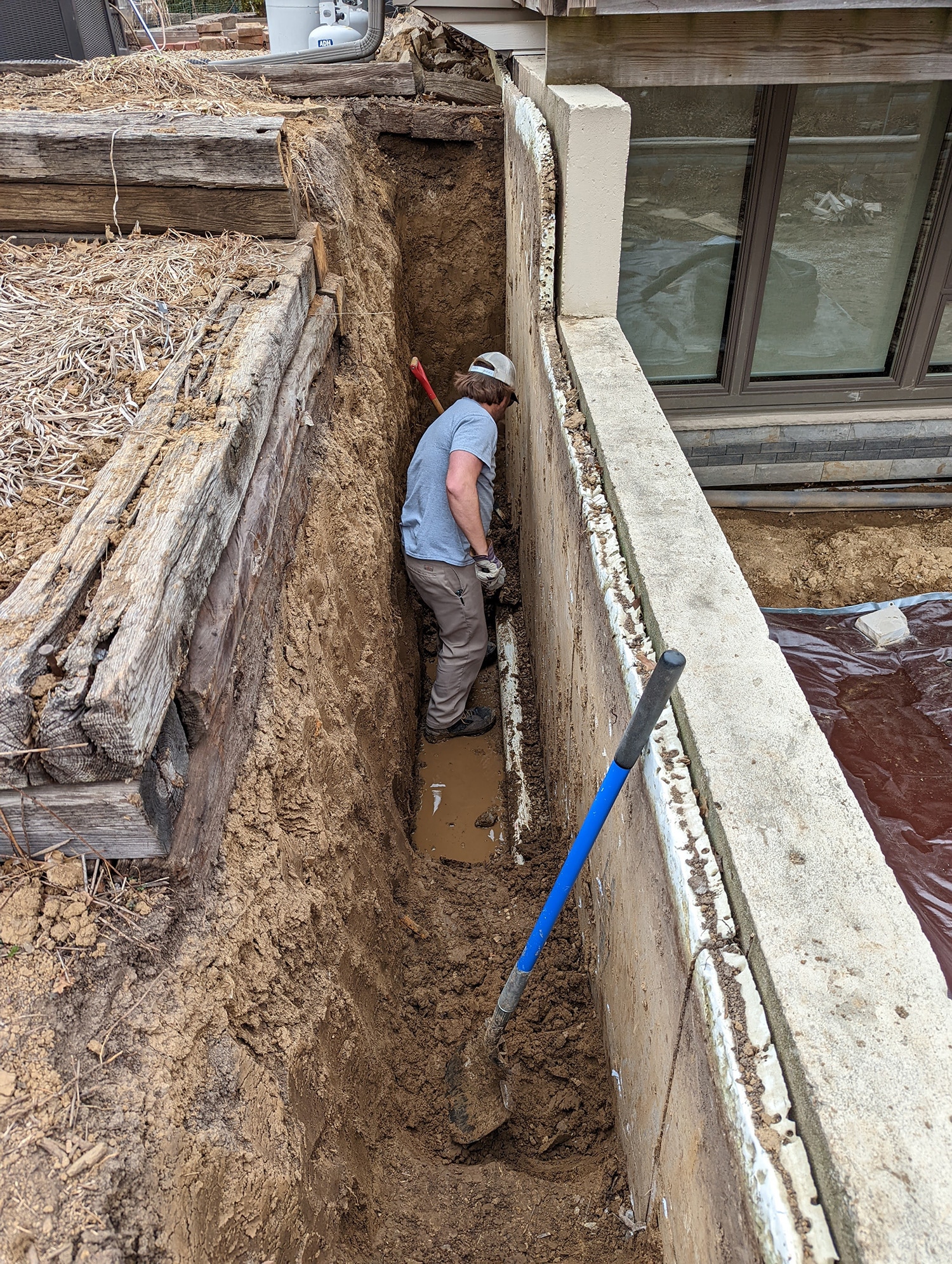
During the project, poor past work was discovered and resulted in some design modifications. The most notable poor workmanship occurred on a 6’ tall concrete retaining wall, where the footing was not at an appropriate depth and the wall was not backfilled appropriately. To solve the improper backfill of the existing concrete wall, a load reduction was achieved by removing solid clay (12 tons, by hand) and replacing it with gravel and new drainage pipes. The shallow footing was mitigated by adding and installing a stone grill station and bench seat in front of the wall to keep adequate weight on the footing.
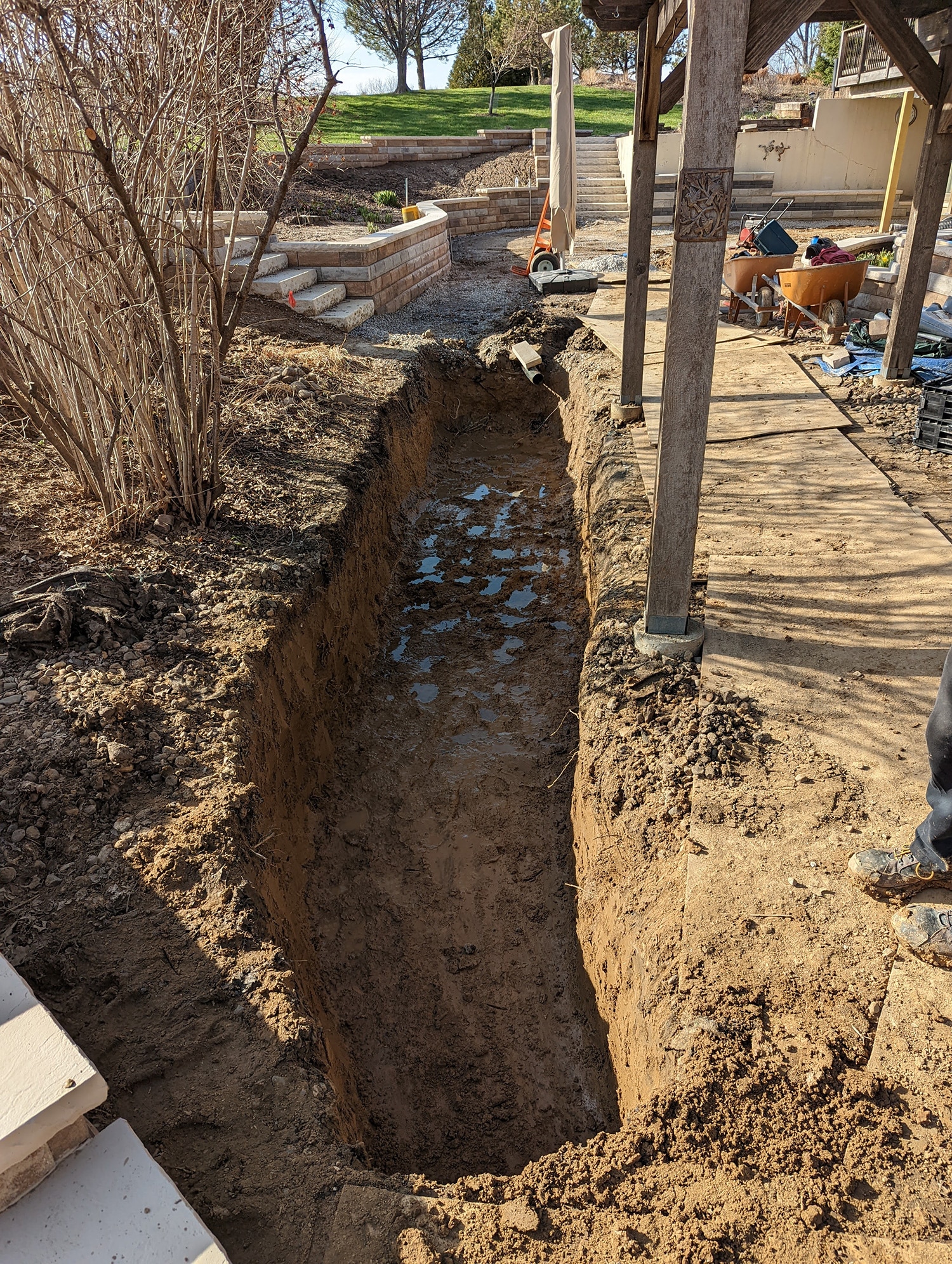
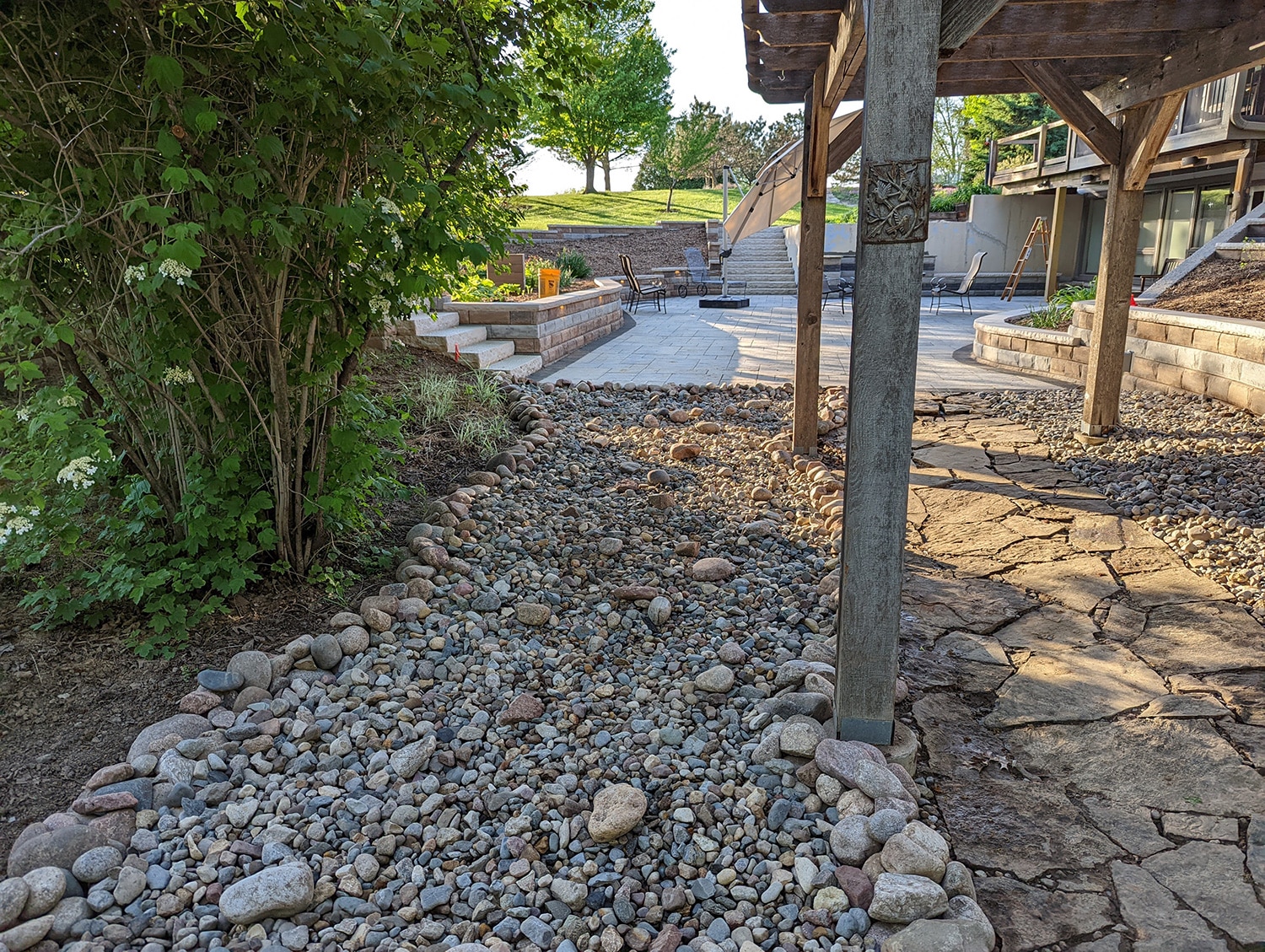
Due to a high-water table that was discovered in the excavation phase, a network of french drains and drainage pipes run underneath the patio, directing water from saturated areas into a new infiltration trench that is located underneath the restored dry creek bed. The infiltration trench has a capacity of storing a 2” rainstorm in 24 hours (130 cubic feet) and it is designed to overflow into the homeowner’s existing rain garden.
After draining the patio space, soil stabilization fabric was used to help provide a stabilized subbase for the patio, which sits upon fluid-like soils. The patio was constructed to properly drain towards the infiltration trench, which required the use of compound slopes to get the correct drainage patterns.